
How Many Carbs Do You Actually Need? (A Real-World Guide)
Carbs get blamed for a lot. But if you're training regularly, carbohydrate isn't the enemy — it's what fuels the workouts that are actually driving your results. The real question isn't "should I eat carbs," it's "how much, and what does that actually look like on a plate." No food scale required.
The number, in plain terms
The federal minimum (130g/day) is a floor built to keep your brain fueled at rest — it's not a target for someone training. On the other end, the 8–12 grams per kilogram of bodyweight you'll see recommended for endurance athletes is for people training multiple hours a day, most days a week. That's not you either.
For someone strength training a few times a week, the sports-nutrition literature lands on roughly 3–7 grams of carbohydrate per kilogram of bodyweight per day, with most people doing best in the 4–6 g/kg range — call it about 1.8 to 2.7 grams per pound of bodyweight. Here's what that looks like at a few different bodyweights:
| Bodyweight | Practical daily carb range |
|---|---|
| 130 lb | ~235–350g |
| 170 lb | ~305–460g |
| 210 lb | ~380–570g |
Ranges reflect the 3–7 g/kg sports-nutrition range for recreational training (Burke et al., 2011; ACSM/Academy of Nutrition and Dietetics/Dietitians of Canada joint position, 2016) — see sources below. Ask your coach for a number tightened to your actual bodyweight and goals.
What that actually looks like on a plate
A gram target is useless if you're not going to weigh food every day — and you shouldn't have to. Here's what four common carb sources actually look like in a real portion, shown next to something you already know the size of.

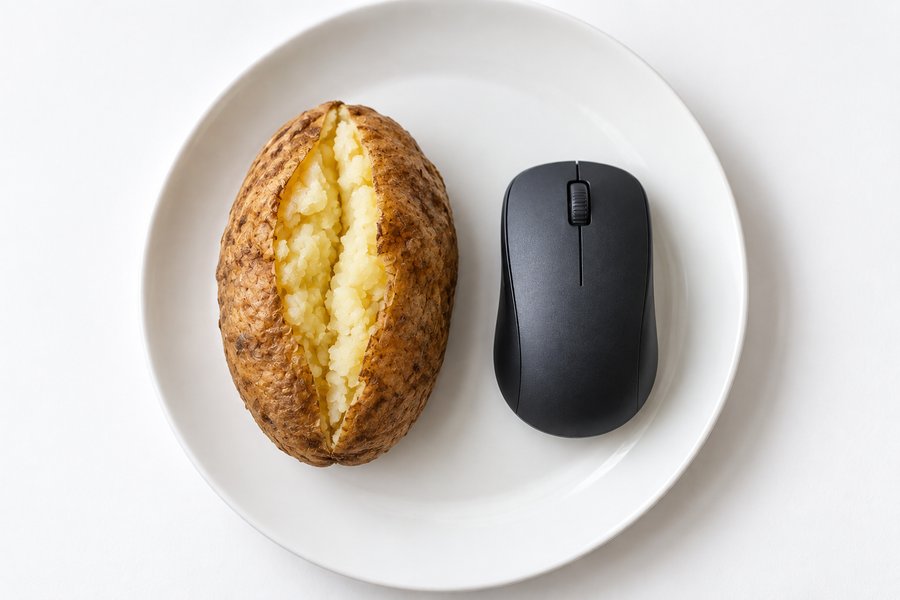
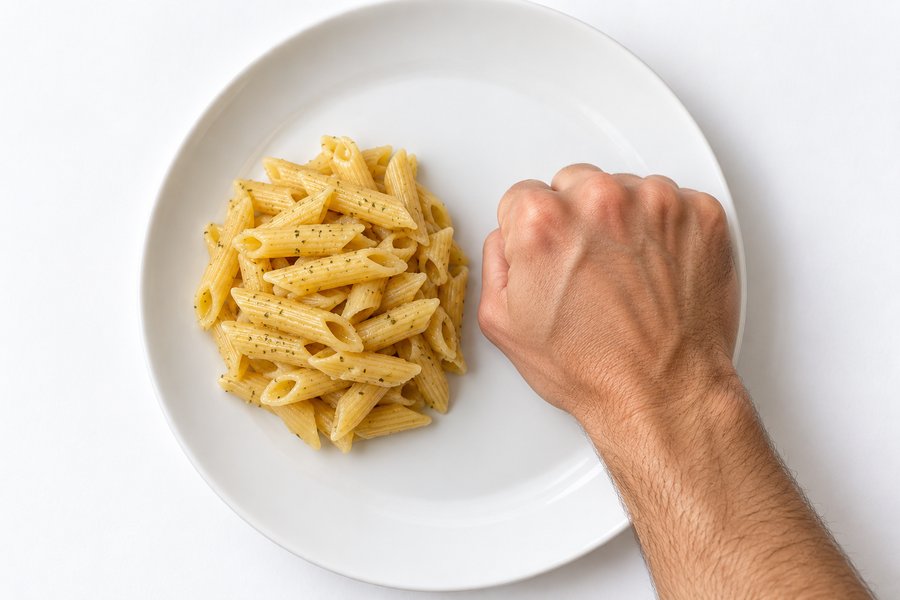

Gram values from USDA FoodData Central. Scale comparisons are practical estimates, not official measurements — the goal is a reliable eyeball, not a lab-exact number.
Put it together and a realistic day doesn't look extreme at all: oats at breakfast, rice or pasta alongside a couple of meals, and a potato in the rotation gets a lot of people into their range without ever touching a scale.
Quick Takeaways
- Aim for 3–7g of carbs per kg of bodyweightMost people training a few times a week do best in the 4–6g/kg zone — well above the 130g "don't be deficient" government minimum.
- Use visual portions, not a scaleA tennis ball, a fist, a closed hand — close enough, every day, beats exact but inconsistent.
- Spread it across your dayA serving at most meals gets you there without one huge "carb meal" to plan around.
Why This Matters for the Nervous System & Gut
Carbs aren't just workout fuel — they're directly tied to how regulated your nervous system feels day to day. When blood sugar drops too low, the brain treats it as an emergency: glucose-sensing regions in the hypothalamus and brainstem trigger a real adrenaline and cortisol release to force blood sugar back up. That's a documented stress response, not a mood — it's the same physiology behind the shaky, irritable, "hangry" feeling of under-fueling.
Carbs also indirectly support brain serotonin: eating them triggers insulin release, which clears competing amino acids out of the bloodstream and gives tryptophan an easier path across the blood-brain barrier to become serotonin.
And most of these same carb sources carry fiber, which feeds the bacteria in your gut that produce short-chain fatty acids — compounds that talk directly to the vagus nerve, the main line of communication between your gut and your nervous system. Cut carbs too aggressively for too long and research links it to a less diverse gut microbiome and lower short-chain fatty acid production. Carbs aren't working against your nervous system or your gut — done reasonably, they're supporting both.
Want Your Actual Number?
A free assessment gives you a starting point built around your real bodyweight and goals, not a general range.
Take The Free AssessmentWant 1-On-1 Guidance?
Want a free consultation to learn how to implement this into your life?
Get A Free ConsultationFurther Reading
- Burke, Hawley, Wong & Jeukendrup — Carbohydrates for training and competition, Journal of Sports Sciences, 2011
- ACSM/Academy of Nutrition and Dietetics/Dietitians of Canada — Joint Position Statement: Nutrition and Athletic Performance, 2016
- Stanley, Moheet & Seaquist — Central Mechanisms of Glucose Sensing and Counterregulation, Endocrine Reviews, 2019
- Harvard Health — Serotonin: The natural mood booster
- Silva, Bernardi & Frozza — Short-Chain Fatty Acids From Gut Microbiota in Gut-Brain Communication, Frontiers in Endocrinology, 2020
- Academy of Nutrition and Dietetics — Dietary Fiber
- Schoonakker et al. — Impact of dietary macronutrient restriction on the human gut microbiome, Nutrition Research Reviews, 2024
- USDA FoodData Central — portion gram values